
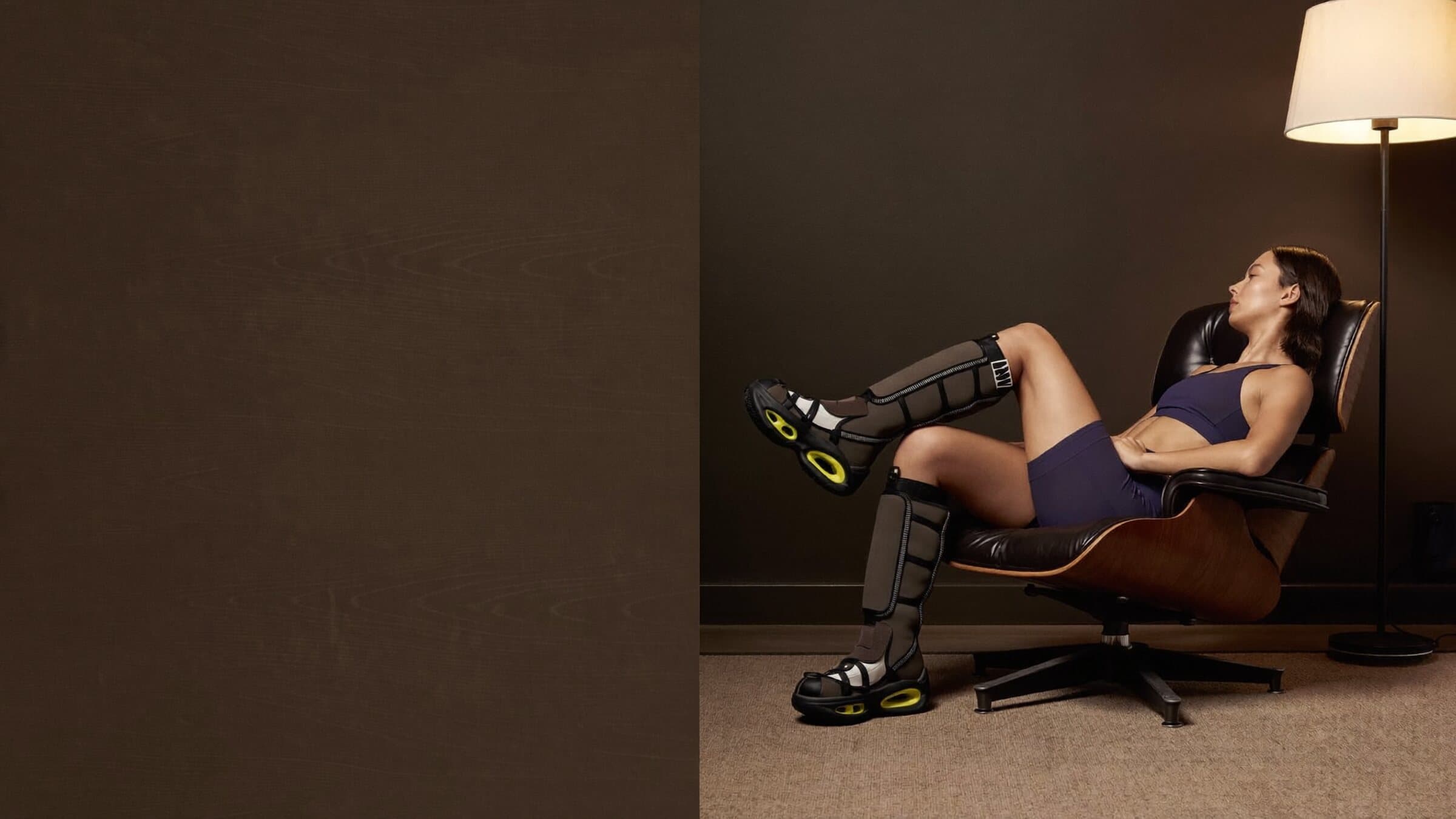
Compression Boots Safety
5 sections6 min read
The short answer
Compression boots apply intermittent external pressure and should feel secure, not painful, numb, or restrictive. Ask a clinician before use if you have circulation problems, suspected or prior blood clots, recent surgery, significant swelling, infection, acute injury, or another relevant condition. Stop for pain, numbness, tingling, color change, or worsening symptoms.
The decision this page helps you make
Compression boots are device-led, which means fit, pressure, labeling, and the actual model matter. A brand name does not establish that every setting is appropriate for every person. Before use, confirm the device, sleeve sizing, permitted body area, supervision, cleaning process, and manufacturer-directed contraindications. Report current swelling, pain, skin problems, altered sensation, circulation history, clot concerns, recent surgery, and injury. You should remain able to communicate and stop the cycle. Compression is not a way to test unexplained calf pain or post-travel swelling. Those symptoms can require medical evaluation first. FDA clearance language for a device also does not prove every broad recovery or performance claim used in marketing.

What matters before you choose
Device fit and pressure
The sleeve should fit the intended body area without folding, pinching, or compressing an unapproved location. Pressure may cycle through chambers, but you should not experience sharp pain, numbness, tingling, marked color change, or an inability to stop. Staff must follow the instructions for the exact model in use. If staff cannot identify the exact device and its instructions, do not begin the session. You should remain able to communicate, stop the cycle, and have the sleeve removed promptly throughout the session.
Circulation and clot questions
Circulation disorders and blood-clot concerns change the safety decision because external pressure may be inappropriate or require clinical direction. Do not use boots to manage new one-sided swelling, calf pain, warmth, redness, or unexplained shortness of breath. Those symptoms are not a routine recovery use case. Ask an appropriate clinician about known vascular disease, clot history, lymphedema, or other circulation concerns. Research findings should name the measured outcome instead of blending comfort, circulation, healing, and performance into one promise.
Recent surgery or injury
Recent surgery, fracture, acute injury, significant bruising, open skin, infection, or a newly swollen area may require postponement or provider-specific clearance. A postoperative protocol, when one exists, belongs to the treating clinical team and may use equipment or settings that differ from a wellness studio. Do not assume that a commercially available boot can substitute for prescribed medical compression or rehabilitation. The exact model, sleeve, fit, pressure, and manufacturer instructions must control the session instead of a generic device routine.
Numbness and pain stop cues
End the session for pain, increasing pressure intolerance, numbness, tingling, weakness, unusual coldness, pale or blue color, skin injury, dizziness, or worsening swelling. Release pressure and seek assistance rather than waiting for the cycle to finish. Persistent or severe symptoms need medical evaluation. Chest symptoms, severe breathing difficulty, fainting, or another medical emergency requires 911. Settings from another model or another person's routine should not be transferred without device-specific verification.
Device claim limits
Narrow device claims describe how the equipment operates and what its cleared labeling allows. They do not establish guaranteed soreness relief, faster recovery, improved circulation in every person, injury prevention, or better performance. Research on intermittent pneumatic compression shows mixed outcomes and variable certainty. Treat any comfort response as individual and keep contraindications, model verification, and fit ahead of marketing language. Individual reports of lighter-feeling legs cannot substitute for clinical evidence or model-specific contraindication screening.

A practical way to use this information
- 1
For Compression Boots Safety, start with the plain-language definition and separate the topic from adjacent terms that are often used interchangeably.
- 2
Apply the idea to the activity that came before and the demand that comes next instead of copying a universal protocol.
- 3
Use the evidence section to distinguish supported findings, mixed findings, practical experience, and unanswered questions.
- 4
If a service is relevant, review its preparation, supervision, stop process, and current operating details before booking.
- 5
Use a qualified professional for diagnosis, medical clearance, persistent symptoms, medication questions, or a concern outside a wellness studio's scope.
Fit, limits, and when to choose another path
Pneumatic compression is not appropriate for every person or situation. Follow approved screening and stop guidance, and remember that research findings on exercise recovery are mixed and vary by outcome. A website cannot diagnose a condition, clear someone for a service, or replace emergency or clinical care. New, severe, worsening, or unexplained symptoms, fainting, breathing difficulty, chest symptoms, major swelling, loss of function, or other urgent concerns should be routed to appropriate medical care instead of a recovery booking. For Compression Boots Safety, follow the current service-specific screening and stop guidance rather than relying on general information alone.
Where this fits in the Recovery Mode system
Return to When Recovery Needs Medical Care for the complete topic map.
Continue with Localized Cryotherapy Safety, Questions for a First Sports Acupuncture Visit, or Questions to Ask Before IV Hydration when that decision is closer to your situation.
For the service or selection path, review Choose Your Recovery.
For Compression Boots Safety, the right choice can change with the day. Compare the current experience, level of guidance, time, preparation, and what you intend to do next. Use the live booking or contact source for changing details, and do not treat general information as personal medical clearance.
Frequently asked questions
Ask a clinician first for circulation disease, blood-clot concerns, one-sided unexplained swelling, recent surgery, acute injury, infection, altered sensation, or another condition affected by pressure. Device-specific contraindications also must be reviewed. Pressure should feel controlled and tolerable, never like a test of how much compression a person can endure.
No. Compression can feel firm or cyclical, but it should not cause pain, numbness, tingling, marked color change, or worsening symptoms. You must be able to stop and have the sleeve removed promptly. New one-sided swelling or calf pain requires medical evaluation before external compression is treated as routine recovery.
Do not guess. New swelling, calf pain, warmth, redness, or unexplained breathing symptoms need medical evaluation. Known vascular or lymphatic conditions require guidance from the clinician responsible for your care. Fit and pressure should be checked again when swelling, clothing, positioning, or the intended body area changes.
Only with direction from the treating clinical team when appropriate. Postoperative or injury protocols may use different equipment, settings, and objectives. A wellness device cannot replace prescribed medical compression or rehabilitation. A sleeve placed over open skin, infection, acute trauma, or altered sensation may create avoidable risk without proper guidance.
Stop for pain, numbness, tingling, weakness, unusual coldness, pale or blue color, skin injury, dizziness, or increasing swelling. Chest symptoms, severe breathing difficulty, or fainting requires emergency action. Device clearance supports only verified labeled language and does not prove every circulation, recovery, or performance claim.
Next step
For Compression Boots Safety, confirm the current service details, responsible provider, screening, and personal-fit questions before reserving. Use Book Your Recovery Session for an operational question, and use an appropriate health professional for medical clearance or symptoms that need evaluation.
Ask before you book
Ask the studio directly, and speak with a qualified clinician about whether this suits you.
Sources and review basis
- Compression Device Claims(opens in a new tab)
Official Regulator. Supports: FDA clearance language for named NormaTec models supports narrow device wording and does not itself support broad recovery or performance promises. Limits: Actual device model and IFU are unverified.
- Health Claims(opens in a new tab)
Official Regulator. Supports: FTC health-marketing guidance requires truthful, non-misleading, adequately substantiated express and implied health claims. Limits: Service-specific evidence and qualified review remain necessary.
- Medical Emergency Action(opens in a new tab)
Official Government Guidance. Supports: NYC311 directs people to call 911 for a medical or health-related emergency. Limits: Qualified review still owns the exact sitewide wording and placement.
- Recovery Mode NormaTec compression page(opens in a new tab)
Recovery Mode. Supports: NormaTec leg compression is represented as a current service.
- Intermittent pneumatic compression and exercise recovery review(opens in a new tab)
PubMed. Supports: The evidence base is mixed and certainty varies for pneumatic compression and recovery outcomes.