
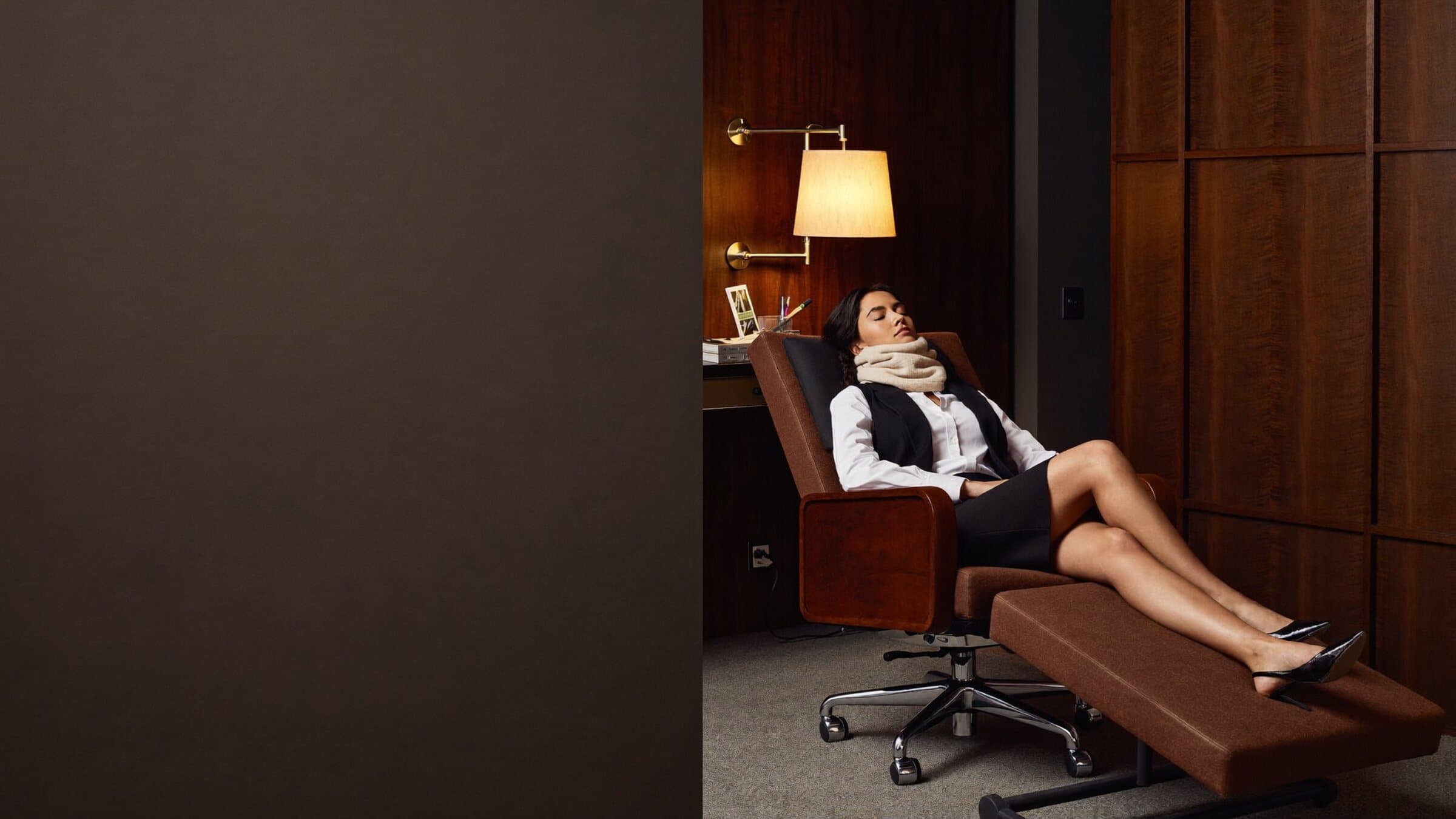
A Recovery Guide for Desk Tension
5 sections7 min read
The short answer
Desk tension often reflects prolonged position, repetitive screen work, limited movement variety, workload, and stress rather than one damaged posture. Change positions, take manageable movement breaks, and use gentle mobility. Massage may support comfort. Numbness, weakness, coordination change, severe headache, trauma, or persistent worsening pain needs medical evaluation.
The decision this page helps you make
There is no single perfect sitting posture that prevents every symptom. The more useful target is movement variety, a workstation that supports the tasks you actually perform, and breaks you can repeat. Neck, shoulder, back, hip, wrist, and eye discomfort can all be influenced by duration, repetition, screen height, reach, lighting, vision, stress, and sleep. Small changes made throughout the day often make more sense than one aggressive recovery session after hours. Massage or mobility can be optional comfort tools, but neither should be marketed as permanently correcting posture or treating neurologic symptoms. A sudden change, major weakness, numbness, balance problem, severe headache, trauma, or persistent loss of function warrants appropriate evaluation.

What matters before you choose
Movement-break context
Movement breaks reduce the time spent in one position and give you a chance to notice symptoms before they escalate. A break can be brief: stand, walk, look farther away, change hand position, or perform a comfortable movement. The ideal frequency depends on tasks and tolerance, so attach breaks to natural transitions such as calls, saved files, meetings, or refilling water rather than chasing one rigid timer.
Neck and shoulder load
Neck and shoulder load can rise when a screen, keyboard, mouse, phone, lighting, or visual demand pulls you into a repeated position. Adjust the work area so frequently used items are easy to reach and the screen is comfortably visible. That does not create a medically perfect posture. It simply reduces avoidable effort and makes position changes easier throughout the day. Write down what changed and when, since a clear timeline helps a coach or clinician interpret the concern.
Hip and back stiffness
Hip and back stiffness can reflect prolonged sitting, limited movement variety, physical deconditioning, recent training, stress, or many other factors. Try comfortable walking, standing, or gentle mobility without forcing end range. A sensation of tightness does not prove that tissue is shortened or a joint is out of place. Persistent, severe, or radiating symptoms need more than a stretching routine. Make the smallest reasonable change first so you can tell whether it helped, did nothing, or made symptoms worse.
Massage and mobility options
Massage may offer adjustable hands-on pressure and a relaxation experience, while mobility work can explore comfortable movement. Neither option guarantees permanent posture correction, injury prevention, or treatment of the cause. Share symptoms, health history, medications, skin concerns, and recent injury with the licensed provider. Stop any technique that creates sharp, burning, electric, numb, or worsening sensation. If the response becomes sharp, worsening, neurologic, or function limiting, stop using a wellness choice as a test.
Pain and neurologic red flags
Seek medical evaluation for new weakness, numbness, loss of hand function, balance or coordination changes, pain after significant trauma, fever with severe pain, a sudden severe headache, bowel or bladder changes, or symptoms that persist and limit normal activity. Chest symptoms, severe breathing difficulty, stroke signs, fainting, or another possible emergency requires 911 rather than a workplace wellness session. General education cannot account for every diagnosis, medication, injury, or other factor that changes personal suitability.

A practical way to use this information
- 1
For A Recovery Guide for Desk Tension, start with the plain-language definition and separate the topic from adjacent terms that are often used interchangeably.
- 2
Apply the idea to the activity that came before and the demand that comes next instead of copying a universal protocol.
- 3
Use the evidence section to distinguish supported findings, mixed findings, practical experience, and unanswered questions.
- 4
If a service is relevant, review its preparation, supervision, stop process, and current operating details before booking.
- 5
Use a qualified professional for diagnosis, medical clearance, persistent symptoms, medication questions, or a concern outside a wellness studio's scope.
Fit, limits, and when to choose another path
A recovery studio is not emergency or diagnostic care. New, severe, worsening, or unexplained symptoms should be assessed by an appropriate health professional before a wellness booking. A website cannot diagnose a condition, clear someone for a service, or replace emergency or clinical care. New, severe, worsening, or unexplained symptoms, fainting, breathing difficulty, chest symptoms, major swelling, loss of function, or other urgent concerns should be routed to appropriate medical care instead of a recovery booking. For A Recovery Guide for Desk Tension, follow the current service-specific screening and stop guidance rather than relying on general information alone.
Where this fits in the Recovery Mode system
Return to Recovery Fundamentals for the complete topic map.
Continue with A Practical Foam Rolling Guide, Stretching Versus Mobility, or Delayed Onset Muscle Soreness Guide when that decision is closer to your situation.
For the service or selection path, review Choose Your Recovery.
For A Recovery Guide for Desk Tension, the right choice can change with the day. Compare the current experience, level of guidance, time, preparation, and what you intend to do next. Use the live booking or contact source for changing details, and do not treat general information as personal medical clearance.
Frequently asked questions
Desk work can combine prolonged position, repetitive reaching, visual demand, workstation setup, stress, and limited movement variety. Recurring tension does not prove one bad posture or one tissue problem is the sole cause. Do not let a familiar label hide a symptom that is severe, unexplained, or moving in the wrong direction.
Change position often enough that you are not waiting for severe discomfort. The exact interval varies. Use natural work transitions to stand, walk, look away, adjust reach, or perform a comfortable movement. Timing, recent workload, health history, and the next demand all change how this general guidance should be applied.
They may support temporary comfort or movement variety for some people. Neither guarantees permanent posture correction, injury prevention, or treatment of a medical cause. Keep pressure and movement comfortable and adjustable. Keep sleep, food, fluids, and training load visible before attributing the entire response to one optional modality.
Numbness or weakness changes the decision. Stop aggressive self-treatment and arrange appropriate evaluation, particularly when symptoms are new, worsening, radiating, associated with coordination loss, or limiting hand or limb function. Consider whether the choice solves the actual constraint or merely adds another task to an already demanding recovery plan.
Seek evaluation for persistent or worsening pain, trauma, major weakness or numbness, balance changes, severe headache, fever, or function loss. Call 911 for stroke signs, chest symptoms, severe breathing difficulty, or fainting. A service can remain optional even when it is available, familiar, or popular among people with similar goals.
Next step
For A Recovery Guide for Desk Tension, confirm the current service details, responsible provider, screening, and personal-fit questions before reserving. Use Book Your Recovery Session for an operational question, and use an appropriate health professional for medical clearance or symptoms that need evaluation.
Reserve a session
Current durations, prices, providers, and availability live in the booking system, not on this page.
Booking is handled by Acuity Scheduling. Nothing on this page is medical advice or clearance to participate.
Sources and review basis
- Corporate Wellness(opens in a new tab)
First Party Web. Supports: The official site markets corporate wellness services. Limits: Capacity, staffing, service area, COI, logistics, and client proof are not published in sufficient detail.
- Massage Evidence And Safety(opens in a new tab)
Official Health Source. Supports: Massage evidence and safety language should remain qualified and avoid guaranteed outcomes. Limits: Does not substantiate a Recovery Mode outcome claim.
- Medical Emergency Action(opens in a new tab)
Official Government Guidance. Supports: NYC311 directs people to call 911 for a medical or health-related emergency. Limits: Qualified review still owns the exact sitewide wording and placement.
- Health Claims(opens in a new tab)
Official Regulator. Supports: FTC health-marketing guidance requires truthful, non-misleading, adequately substantiated express and implied health claims. Limits: Service-specific evidence and qualified review remain necessary.
- Physical Activity Guidelines for Americans(opens in a new tab)
U.S. Department of Health and Human Services. Supports: Evidence-based physical activity guidance and the role of gradual, appropriate activity.
- Adult Activity: An Overview(opens in a new tab)
Centers for Disease Control and Prevention. Supports: Current adult physical-activity guidance and the principle that activity can be accumulated across a week.
- Massage Therapy: What You Need To Know(opens in a new tab)
National Center for Complementary and Integrative Health. Supports: Evidence limits, safety considerations, and questions to ask a massage practitioner.
- New York physical therapy practice guidance(opens in a new tab)
New York State Education Department. Supports: New York licensure, professional-title, and practice boundaries for physical therapy.