

Heat and Infrared Sauna Basics
5 sections6 min read
The short answer
Infrared sauna uses radiant energy to warm the body and surrounding surfaces, while traditional sauna primarily heats the room air. Either experience adds heat stress and sweating. Comfort varies, and health claims must stay qualified. Hydration, medication effects, pregnancy, cardiovascular concerns, and stop symptoms belong in screening before use.
The decision this page helps you make
Infrared describes how heat is delivered, not a guarantee that the experience is gentler, safer, or more effective for every person. Room temperature may feel different from a traditional sauna, yet your body still has to manage heat and sweating. Approach the first session as an exposure to assess, not a test to pass. Confirm the equipment, supervision, privacy, cleaning, emergency process, and current operating instructions before use. Arrive without obvious dehydration, leave when symptoms appear, and allow a gradual cooldown. Research about one sauna type cannot automatically prove claims about another, and sweating is not evidence that a treatment removes undefined toxins or cures disease.
What matters before you choose
Infrared experience
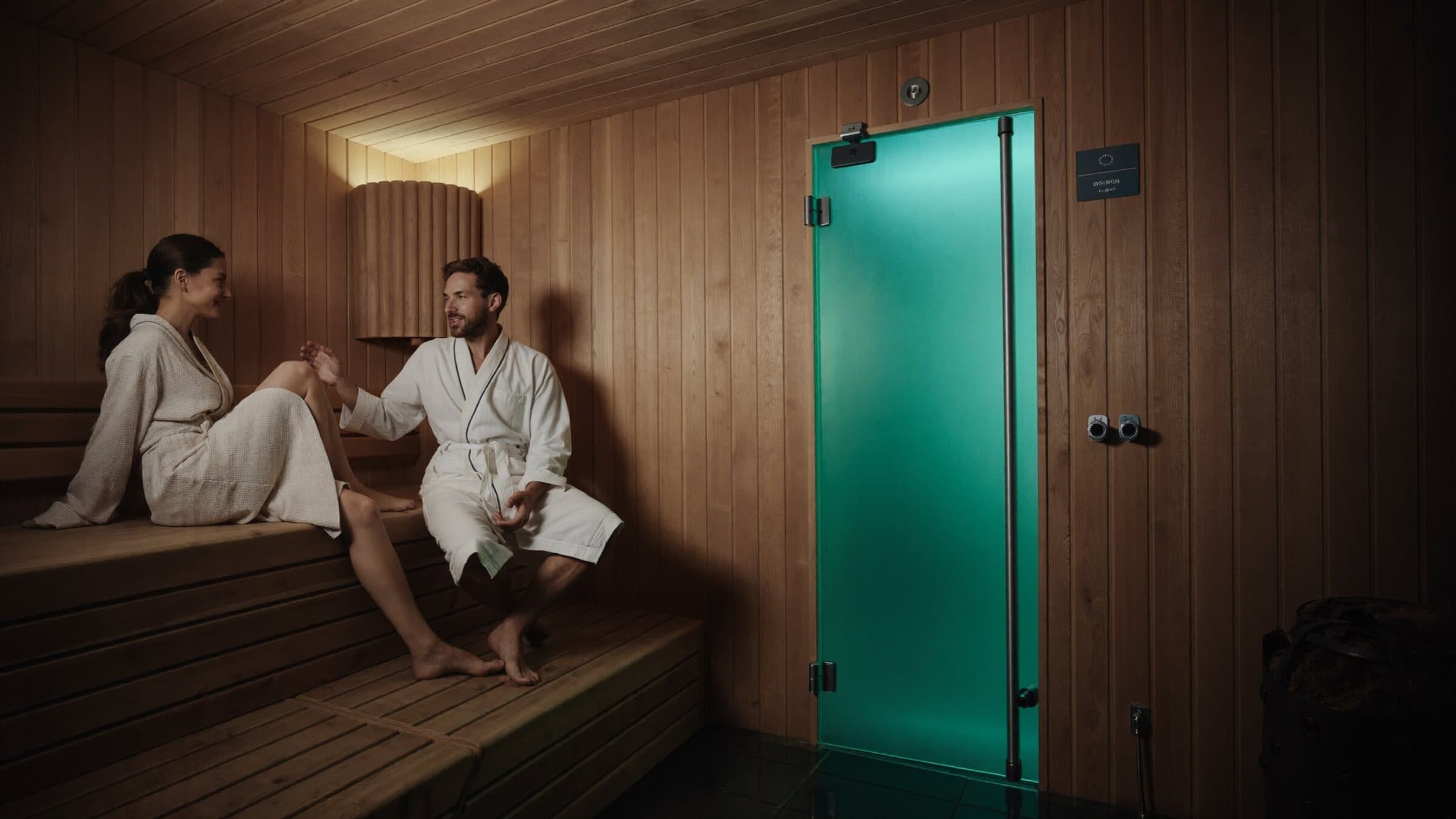
An infrared sauna uses radiant energy that is absorbed by the body and nearby surfaces, while a traditional sauna relies more heavily on heated air. That distinction describes the heating method, not the medical outcome. The exact device, room setup, operating range, and manufacturer instructions matter. Recovery Mode lists an infrared sauna service, but confirm the exact equipment and operating protocol before you rely on the description or book.
Heat tolerance
Heat tolerance changes with health, acclimation, medications, recent exercise, hydration, sleep, illness, and the room itself. A person who enjoys one sauna setting may feel unwell in another. Begin conservatively, stay able to communicate and exit, and avoid competing over time or heat. Familiarity can change comfort, but it does not erase cardiovascular strain, dehydration risk, or the need to stop when warning signs appear.
Sweat and hydration
Sweating increases fluid loss, particularly when sauna follows training or hot-weather activity. Consider the whole day's heat and exercise load rather than treating the room as an isolated event. Replace fluids progressively according to your circumstances and avoid alcohol or substances that impair judgment or temperature regulation. A clinician-directed fluid restriction, kidney or heart condition, or medication affecting fluid balance requires individualized advice rather than a generic hydration target.
Evidence limits
Evidence must match the exact claim and device. Research involving traditional sauna cannot simply be relabeled as infrared evidence, and findings in a clinical population may not predict a wellness result for every visitor. It is reasonable to describe warmth, quiet, and a possible relaxation experience. It is not reasonable to promise detoxification, disease treatment, immunity, injury repair, guaranteed recovery, or improved performance without direct, adequate support.
Screening boundary
Ask a clinician before heat exposure when pregnancy, cardiovascular disease, uncontrolled blood pressure, fainting, heat intolerance, relevant medication use, or another health concern could affect suitability. End the session for chest symptoms, severe dizziness, faintness, confusion, nausea, unusual weakness, breathing difficulty, or inability to cool normally. Call 911 for a medical emergency rather than waiting for studio assistance or an online response. Infrared identifies the heating method and does not guarantee a milder physiological response or a particular health outcome.


A practical way to use this information
- 1
For Heat and Infrared Sauna Basics, start with the plain-language definition and separate the topic from adjacent terms that are often used interchangeably.
- 2
Apply the idea to the activity that came before and the demand that comes next instead of copying a universal protocol.
- 3
Use the evidence section to distinguish supported findings, mixed findings, practical experience, and unanswered questions.
- 4
If a service is relevant, review its preparation, supervision, stop process, and current operating details before booking.
- 5
Use a qualified professional for diagnosis, medical clearance, persistent symptoms, medication questions, or a concern outside a wellness studio's scope.
Fit, limits, and when to choose another path
Sudden cold-water exposure can affect breathing, heart rate, and blood pressure. Heat exposure also increases fluid loss. People with health concerns should discuss fit with an appropriate health professional, and everyone should leave immediately if instructed by staff or if warning symptoms appear. A website cannot diagnose a condition, clear someone for a service, or replace emergency or clinical care. New, severe, worsening, or unexplained symptoms, fainting, breathing difficulty, chest symptoms, major swelling, loss of function, or other urgent concerns should be routed to appropriate medical care instead of a recovery booking. For Heat and Infrared Sauna Basics, follow the current service-specific screening and stop guidance rather than relying on general information alone.
Where this fits in the Recovery Mode system
Return to Cold Exposure Basics for the complete topic map.
Continue with Cold Plunge Before or After a Workout?, Sauna Hydration and Aftercare, or Preparing for Your First Cold Plunge when that decision is closer to your situation.
For the service or selection path, review Infrared Sauna and Cold Plunge.
For Heat and Infrared Sauna Basics, the right choice can change with the day. Compare the current experience, level of guidance, time, preparation, and what you intend to do next. Use the live booking or contact source for changing details, and do not treat general information as personal medical clearance.
Frequently asked questions
Infrared refers to radiant energy used to deliver heat. The room may operate differently from a traditional sauna, but the exact experience depends on equipment and settings. The label alone does not prove a particular health benefit.
Some infrared rooms may use lower air temperatures than traditional saunas, yet radiant heat can still create substantial body heat and sweating. Perceived comfort varies, so a lower number does not automatically mean lower personal risk.
Heat and sweating can add fluid loss to exercise, travel, or illness. Arrive without obvious dehydration, consider the full day's load, cool gradually, and seek individualized guidance when health conditions or medications affect fluid balance.
Research does not prove that every infrared device produces every claimed wellness or medical outcome. Findings from traditional sauna or specific clinical settings cannot be transferred automatically, and individual relaxation is not evidence of disease treatment.
Discuss heat with a clinician if pregnancy, heart or circulation disease, blood-pressure concerns, fainting, heat intolerance, or relevant medications apply. Stop immediately for chest symptoms, severe dizziness, confusion, breathing difficulty, or unusual weakness. A lower air temperature can still produce substantial heat stress, so perceived gentleness is not a medical clearance.
Next step
For Heat and Infrared Sauna Basics, confirm the current service details, responsible provider, screening, and personal-fit questions before reserving. Use Book Your Recovery Session for an operational question, and use an appropriate health professional for medical clearance or symptoms that need evaluation.
Reserve a session
Current durations, prices, providers, and availability live in the booking system, not on this page.
Booking is handled by Acuity Scheduling. Nothing on this page is medical advice or clearance to participate.
Sources and review basis
- Contrast Service(opens in a new tab)
First Party Web. Supports: The official site markets a combined infrared sauna and cold plunge service. Limits: Privacy, temperatures, duration, supervision, towels, shower, and screening are not fully verified.
- Cold Exposure Safety(opens in a new tab)
Official Health Source. Supports: Cold exposure can create injury and acute physiological risk, so service-specific screening and use guidance are required. Limits: Exact device and protocol require service-specific review.
- Health Claims(opens in a new tab)
Official Regulator. Supports: FTC health-marketing guidance requires truthful, non-misleading, adequately substantiated express and implied health claims. Limits: Service-specific evidence and qualified review remain necessary.
- Recovery Mode infrared sauna and cold plunge page(opens in a new tab)
Recovery Mode. Supports: Infrared sauna and cold plunge are represented as a combined service.
- Cold water immersion risks(opens in a new tab)
American Heart Association. Supports: Cold shock, breathing, blood pressure, heart strain, and gradual acclimation cautions.
- Preventing hypothermia(opens in a new tab)
Centers for Disease Control and Prevention. Supports: Cold water can cause hypothermia and the CDC warning signs.
- Dehydration: symptoms and causes(opens in a new tab)
Mayo Clinic. Supports: Sweating, exercise, heat exposure, and dehydration risk.
- Exercise and Fluid Replacement Position Stand(opens in a new tab)
PubMed. Supports: Exercise hydration should account for fluid loss, environment, tolerance, and the activity context.
- Medical Emergency Action(opens in a new tab)
Official Government Guidance. Supports: NYC311 directs people to call 911 for a medical or health-related emergency. Limits: Qualified review still owns the exact sitewide wording and placement.