
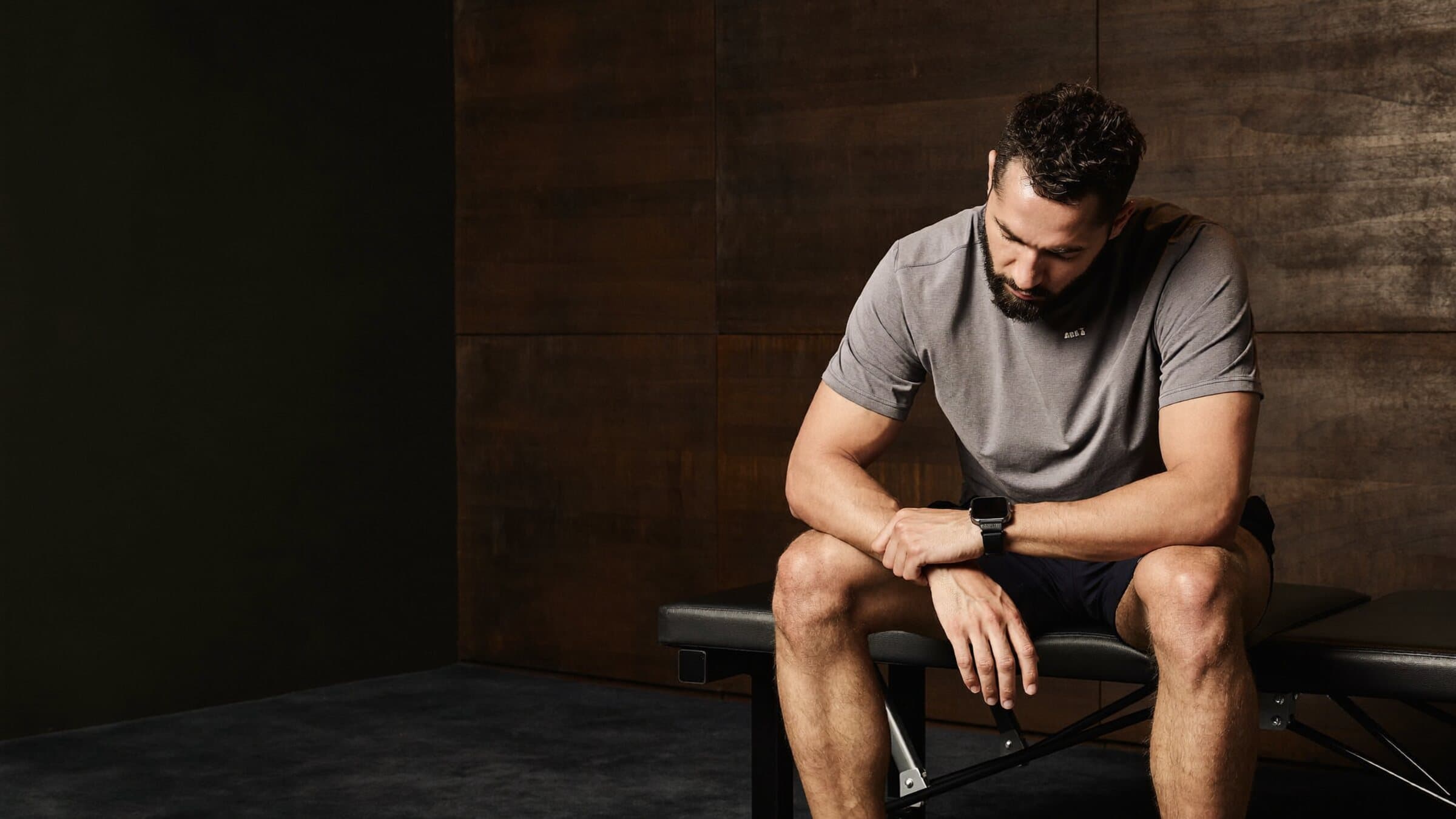
Signs You May Need More Recovery
5 sections7 min read
The short answer
Readiness is a judgment built from several cues: energy, motivation, soreness, sleep, stress, recent performance, and the demands of the planned session. No single feeling or wearable score can clear you to train. Compare with your own baseline, modify when several signals decline, and seek help for pain or red flags.
The decision this page helps you make
The question is not whether you feel perfect. It is whether your current state is reasonably matched to the work you intend to do. A low-energy morning before an easy walk carries different consequences from unusual weakness before heavy lifting or competition. Check multiple signals and compare them with your own normal pattern. A wearable can add data, but its algorithm, measurement conditions, and personal baseline limit interpretation. Use trends to prompt a decision, not to outsource one. When low readiness comes with sharp pain, major swelling, numbness, illness, breathing difficulty, chest symptoms, fainting, or loss of function, stop treating the issue as a training optimization problem and seek appropriate care.
What matters before you choose
Energy and motivation
Energy and motivation can provide an early signal, but both are influenced by mood, sleep, work, food, illness, and the attractiveness of the session. A temporary lack of enthusiasm does not diagnose poor recovery. Notice whether your energy changes after a warm-up and whether the planned demand is optional, routine, or high consequence. Give unusual weakness more weight than ordinary reluctance. Timing, recent workload, health history, and the next demand all change how this general guidance should be applied.
Unusual soreness
Soreness is one cue among many. Mild, familiar muscle tenderness may coexist with reasonable readiness for an easier session, while focal, sharp, worsening, or mechanics-changing pain points in another direction. Check swelling, range, strength, sensation, and normal function. Do not use a hard workout, aggressive massage, or temperature extreme to prove that a concerning symptom is harmless. Keep sleep, food, fluids, and training load visible before attributing the entire response to one optional modality.
Performance trend
Recent performance can reveal a pattern when similar sessions repeatedly feel harder, pace or power declines, coordination changes, or usual loads become unexpectedly difficult. One poor effort can reflect many things, including heat, sleep, nutrition, illness, or normal variation. A sustained trend has more meaning and should prompt a review of training load and broader health context. Consider whether the choice solves the actual constraint or merely adds another task to an already demanding recovery plan.
Sleep and stress context
Sleep and stress provide context for every other signal. A demanding work week, travel, caregiving, or several short nights can change perceived effort without appearing in the training plan. Include those realities instead of blaming motivation. Protecting an easier day may be a productive adjustment, especially when multiple cues move away from your normal baseline at the same time. A service can remain optional even when it is available, familiar, or popular among people with similar goals.
Red flags and referral
Stop training and seek appropriate advice for severe or worsening pain, major swelling, new weakness or numbness, loss of coordination, inability to use a limb normally, fever with concerning symptoms, or a recent significant injury. Chest symptoms, severe breathing difficulty, fainting, stroke signs, or another emergency requires 911. A readiness checklist cannot safely override red flags. A comfort change can inform preference without identifying the cause, proving healing, or clearing the next session.
A practical way to use this information
- 1
For Signs You May Need More Recovery, start with the plain-language definition and separate the topic from adjacent terms that are often used interchangeably.
- 2
Apply the idea to the activity that came before and the demand that comes next instead of copying a universal protocol.
- 3
Use the evidence section to distinguish supported findings, mixed findings, practical experience, and unanswered questions.
- 4
If a service is relevant, review its preparation, supervision, stop process, and current operating details before booking.
- 5
Use a qualified professional for diagnosis, medical clearance, persistent symptoms, medication questions, or a concern outside a wellness studio's scope.
Fit, limits, and when to choose another path
A recovery studio is not emergency or diagnostic care. New, severe, worsening, or unexplained symptoms should be assessed by an appropriate health professional before a wellness booking. A website cannot diagnose a condition, clear someone for a service, or replace emergency or clinical care. New, severe, worsening, or unexplained symptoms, fainting, breathing difficulty, chest symptoms, major swelling, loss of function, or other urgent concerns should be routed to appropriate medical care instead of a recovery booking. For Signs You May Need More Recovery, follow the current service-specific screening and stop guidance rather than relying on general information alone.
Where this fits in the Recovery Mode system
Return to Recovery Fundamentals for the complete topic map.
Continue with Stretching Versus Mobility, Delayed Onset Muscle Soreness Guide, or Training Load and Recovery when that decision is closer to your situation.
For the service or selection path, review Choose Your Recovery.
For Signs You May Need More Recovery, the right choice can change with the day. Compare the current experience, level of guidance, time, preparation, and what you intend to do next. Use the live booking or contact source for changing details, and do not treat general information as personal medical clearance.
Frequently asked questions
Possible signs include unusual fatigue, low motivation, sleep disruption, greater-than-normal soreness, repeated performance decline, irritability, or an unexpectedly hard warm-up. Consider several cues together and compare them with your own normal pattern. When several cues move away from normal together, reduce certainty and consider whether qualified guidance is needed.
No. Soreness is only one signal and can be absent despite fatigue or present despite reasonable readiness. Energy, sleep, stress, illness, function, recent performance, and the planned activity also shape the decision. Ordinary variation is expected, but a sustained decline in health or function deserves more than self-directed recovery.
Look for repeated changes in similar tasks, such as pace, power, coordination, or perceived effort. One poor session has many possible explanations, while a persistent trend deserves a broader training and health review. A repeated pattern is more informative than one isolated observation, especially when normal function has not changed.
No. A wearable provides an estimate based on its sensors and algorithm. Use the trend alongside your own symptoms and context. It cannot examine an injury, diagnose overtraining, or medically clear a session. The safest useful choice preserves normal communication, control, and the ability to stop before symptoms escalate.
Stop for severe or worsening pain, major swelling, weakness, numbness, loss of coordination or function, significant injury, or systemic illness signs. Call 911 for chest symptoms, severe breathing difficulty, fainting, or another emergency. The goal is an informed next step, not certainty that one sensation or score can provide a diagnosis.
Next step
For Signs You May Need More Recovery, confirm the current service details, responsible provider, screening, and personal-fit questions before reserving. Use Book Your Recovery Session for an operational question, and use an appropriate health professional for medical clearance or symptoms that need evaluation.
Reserve a session
Current durations, prices, providers, and availability live in the booking system, not on this page.
Booking is handled by Acuity Scheduling. Nothing on this page is medical advice or clearance to participate.
Sources and review basis
- Health Claims(opens in a new tab)
Official Regulator. Supports: FTC health-marketing guidance requires truthful, non-misleading, adequately substantiated express and implied health claims. Limits: Service-specific evidence and qualified review remain necessary.
- Medical Emergency Action(opens in a new tab)
Official Government Guidance. Supports: NYC311 directs people to call 911 for a medical or health-related emergency. Limits: Qualified review still owns the exact sitewide wording and placement.
- About sleep(opens in a new tab)
Centers for Disease Control and Prevention. Supports: Sleep is important for health and well-being, with needs varying by age and person.
- Physical Activity Guidelines for Americans(opens in a new tab)
U.S. Department of Health and Human Services. Supports: Evidence-based physical activity guidance and the role of gradual, appropriate activity.
- Adult Activity: An Overview(opens in a new tab)
Centers for Disease Control and Prevention. Supports: Current adult physical-activity guidance and the principle that activity can be accumulated across a week.
- Heat and Cold Therapy for Delayed Onset Muscle Soreness(opens in a new tab)
PubMed. Supports: A review found short-term soreness effects for some heat and cold approaches, with a need for more high-quality comparative evidence.