
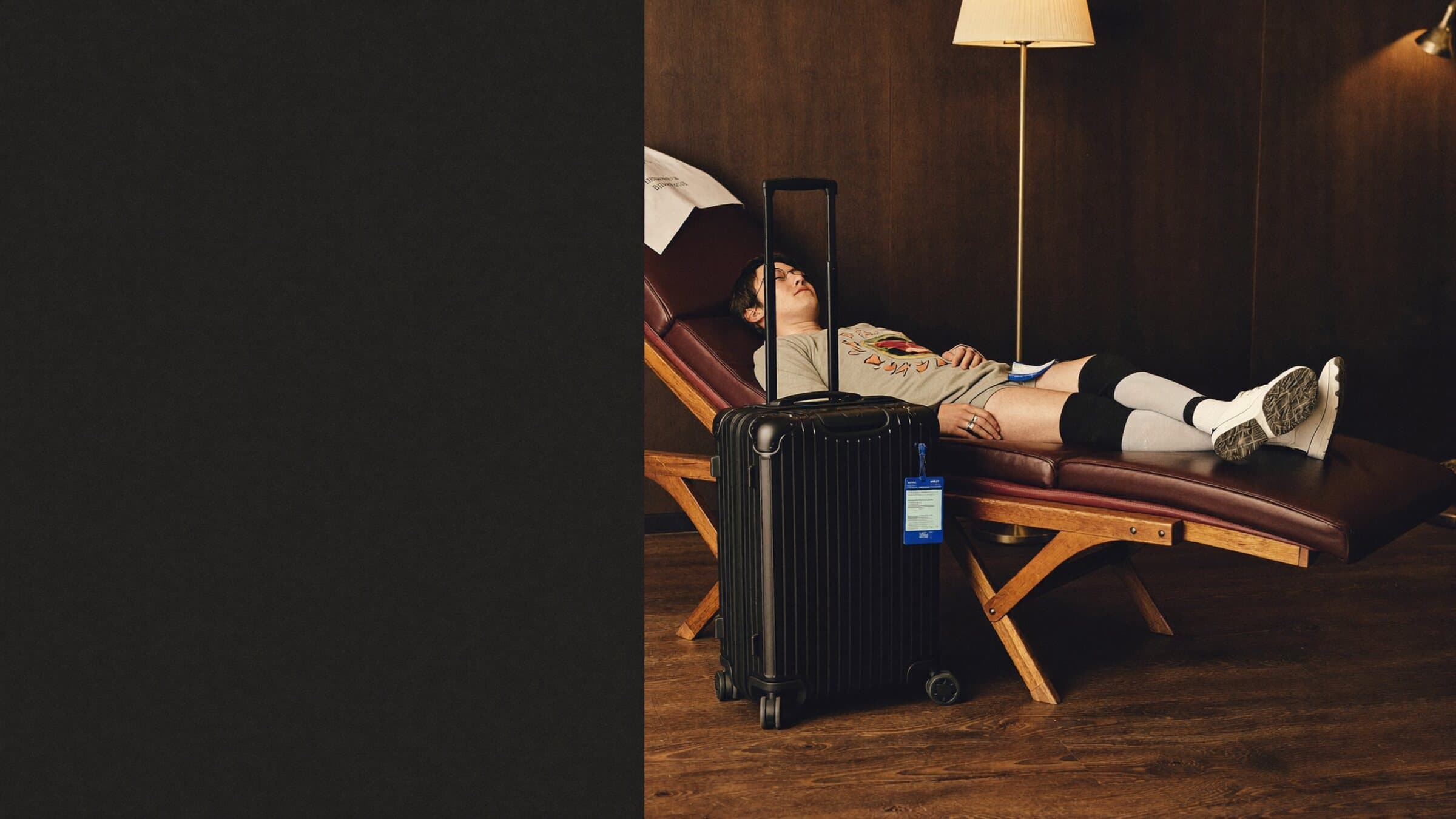
Recovery After Travel
5 sections7 min read
The short answer
Travel recovery starts with context: prolonged sitting, disrupted sleep, unfamiliar walking, luggage, food, fluid, and time-zone changes. Begin with gentle movement and ordinary needs. Massage or compression may be optional comfort choices after screening. New one-sided swelling, calf pain, warmth, redness, chest symptoms, or breathing difficulty needs medical evaluation.
The decision this page helps you make
Heavy legs after travel can have ordinary explanations, but they should not all be treated as harmless stiffness. Long sitting, limited movement, sleep disruption, different meals, dehydration, alcohol, luggage, and sudden increases in walking can each affect how you feel. Start by checking for asymmetry, significant swelling, focal calf pain, redness, warmth, shortness of breath, chest symptoms, or faintness. Those signs change the decision and may require urgent care. If symptoms are mild and familiar, comfortable walking, a normal meal, fluids according to context, and sleep may be enough. Compression boots or massage can be considered only after circulation, clot, injury, and health concerns have been screened.

What matters before you choose
Prolonged sitting context
Prolonged sitting can create stiffness and a heavy sensation, especially when combined with tight seating, limited walking, or an unusual schedule. Change position and move comfortably when it is safe, but do not use exercise as a test for one-sided calf pain or swelling. The important distinction is between general travel discomfort and a new focal or systemic warning sign that needs evaluation. Your baseline is the most useful comparison, since another person's routine cannot establish what fits your current state.
Sleep and schedule disruption
Travel can disrupt sleep opportunity, meal timing, fluid access, medication schedules, and light exposure. Those changes may affect energy and perceived readiness for several days. Avoid trying to correct everything with one intense workout or temperature exposure immediately on arrival. Restore a workable routine progressively and discuss medication or significant jet-lag concerns with an appropriate clinician rather than improvising a medical plan. Do not let a familiar label hide a symptom that is severe, unexplained, or moving in the wrong direction.
Gentle movement
Gentle walking, easy joint movement, and position changes may feel reasonable when symptoms are mild and there are no red flags. Keep the effort comfortable and stop if pain, swelling, breathing, or function worsens. A hard training session is not required to reset circulation. Food, fluid, rest, and time may be more appropriate after a long or overnight journey. Timing, recent workload, health history, and the next demand all change how this general guidance should be applied.
Compression and massage options
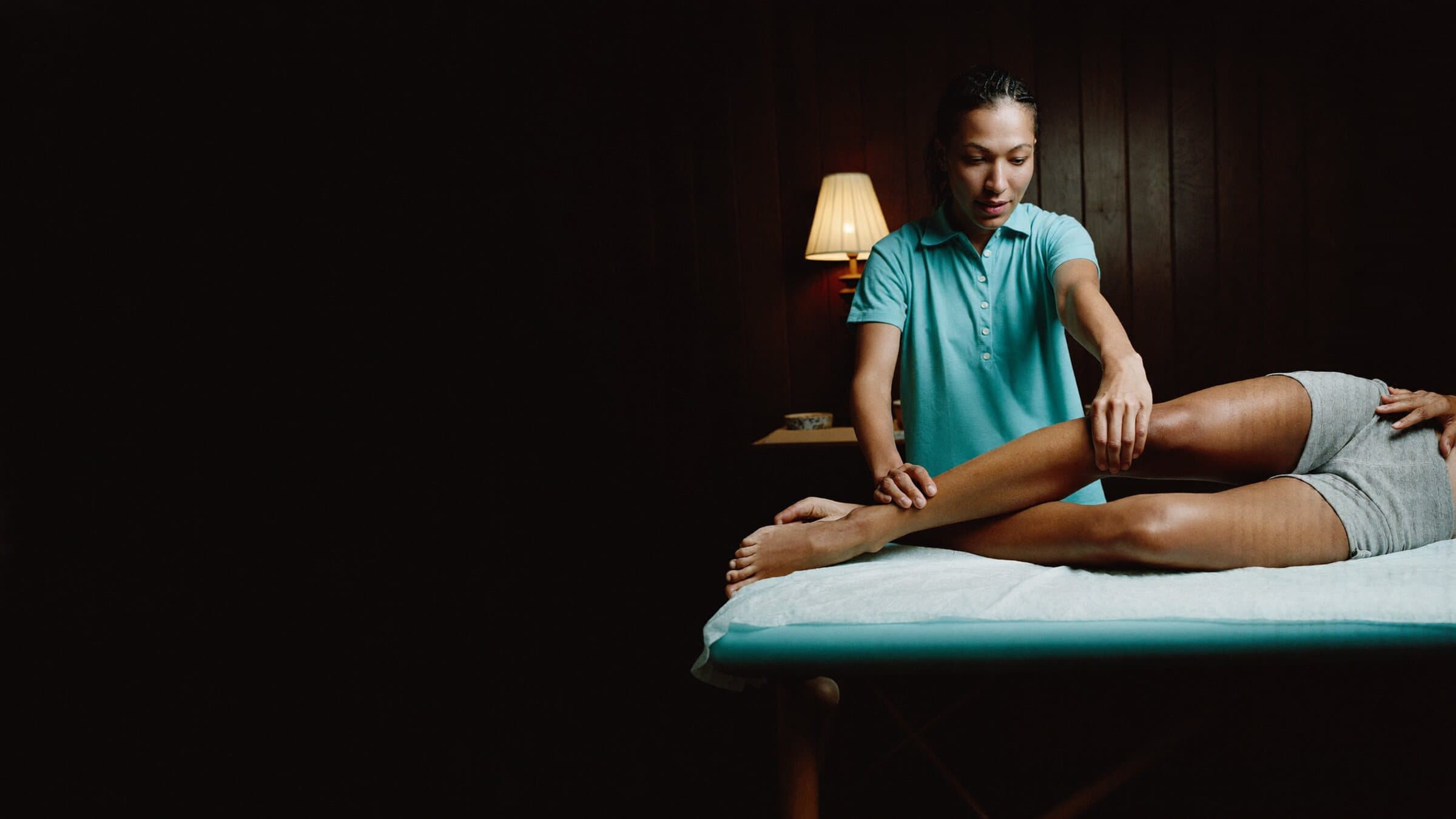
Compression boots apply external pressure and require screening for clot and circulation concerns, recent surgery, acute injury, significant swelling, infection, skin problems, and altered sensation. Massage also requires a symptom and health review. Neither option should be used over unexplained one-sided swelling or calf pain. A comfortable experience does not rule out a medical problem. Keep sleep, food, fluids, and training load visible before attributing the entire response to one optional modality.
Clot-risk boundary
Seek prompt medical advice for new one-sided leg swelling, calf pain, unusual warmth or redness, significant unexplained swelling, or symptoms that worsen after travel. Chest pain, severe shortness of breath, coughing blood, fainting, stroke signs, or another possible emergency requires 911. Do not delay care while waiting to see whether massage, compression, walking, or hydration changes the symptom. Consider whether the choice solves the actual constraint or merely adds another task to an already demanding recovery plan.
A practical way to use this information
- 1
For Recovery After Travel, start with the plain-language definition and separate the topic from adjacent terms that are often used interchangeably.
- 2
Apply the idea to the activity that came before and the demand that comes next instead of copying a universal protocol.
- 3
Use the evidence section to distinguish supported findings, mixed findings, practical experience, and unanswered questions.
- 4
If a service is relevant, review its preparation, supervision, stop process, and current operating details before booking.
- 5
Use a qualified professional for diagnosis, medical clearance, persistent symptoms, medication questions, or a concern outside a wellness studio's scope.
Fit, limits, and when to choose another path
A recovery studio is not emergency or diagnostic care. New, severe, worsening, or unexplained symptoms should be assessed by an appropriate health professional before a wellness booking. A website cannot diagnose a condition, clear someone for a service, or replace emergency or clinical care. New, severe, worsening, or unexplained symptoms, fainting, breathing difficulty, chest symptoms, major swelling, loss of function, or other urgent concerns should be routed to appropriate medical care instead of a recovery booking. For Recovery After Travel, follow the current service-specific screening and stop guidance rather than relying on general information alone.
Where this fits in the Recovery Mode system
Return to Recovery Fundamentals for the complete topic map.
Continue with Hydration and Workout Recovery, Nutrition Basics for Recovery, or Muscle Soreness Versus Pain when that decision is closer to your situation.
For the service or selection path, review Choose Your Recovery.
For Recovery After Travel, the right choice can change with the day. Compare the current experience, level of guidance, time, preparation, and what you intend to do next. Use the live booking or contact source for changing details, and do not treat general information as personal medical clearance.
Frequently asked questions
Long sitting, limited movement, sleep disruption, travel stress, fluid changes, luggage, and increased walking can contribute. Heavy legs are not a diagnosis, so check whether symptoms are one-sided, painful, swollen, warm, or worsening. An observation becomes more useful when it leads to a clear adjustment and a later check on the result.
If symptoms are mild and familiar, comfortable walking or position changes may help you assess readiness. Stop if pain, swelling, breathing, balance, or function worsens, and do not exercise through red flags. Use that cue with the week's training, sleep, nutrition, and life stress rather than interpreting it alone.
Possibly, after screening. Compression is not appropriate for every circulation, clot, surgery, injury, swelling, skin, or sensation concern. New one-sided swelling or calf pain needs evaluation before a boot session. When several cues move away from normal together, reduce certainty and consider whether qualified guidance is needed.
Massage may be an optional comfort choice when symptoms are general and screening is clear. It should not be used to test or treat unexplained swelling, focal calf pain, acute injury, or systemic symptoms. Ordinary variation is expected, but a sustained decline in health or function deserves more than self-directed recovery.
New one-sided swelling, calf pain, warmth, redness, chest pain, severe shortness of breath, coughing blood, or fainting needs medical attention. Call 911 for a possible emergency in New York City. A repeated pattern is more informative than one isolated observation, especially when normal function has not changed.
Next step
For Recovery After Travel, confirm the current service details, responsible provider, screening, and personal-fit questions before reserving. Use Book Your Recovery Session for an operational question, and use an appropriate health professional for medical clearance or symptoms that need evaluation.
Reserve a session
Current durations, prices, providers, and availability live in the booking system, not on this page.
Booking is handled by Acuity Scheduling. Nothing on this page is medical advice or clearance to participate.
Sources and review basis
- Compression Device Claims(opens in a new tab)
Official Regulator. Supports: FDA clearance language for named NormaTec models supports narrow device wording and does not itself support broad recovery or performance promises. Limits: Actual device model and IFU are unverified.
- Massage Evidence And Safety(opens in a new tab)
Official Health Source. Supports: Massage evidence and safety language should remain qualified and avoid guaranteed outcomes. Limits: Does not substantiate a Recovery Mode outcome claim.
- Medical Emergency Action(opens in a new tab)
Official Government Guidance. Supports: NYC311 directs people to call 911 for a medical or health-related emergency. Limits: Qualified review still owns the exact sitewide wording and placement.
- Health Claims(opens in a new tab)
Official Regulator. Supports: FTC health-marketing guidance requires truthful, non-misleading, adequately substantiated express and implied health claims. Limits: Service-specific evidence and qualified review remain necessary.
- About sleep(opens in a new tab)
Centers for Disease Control and Prevention. Supports: Sleep is important for health and well-being, with needs varying by age and person.
- Physical Activity Guidelines for Americans(opens in a new tab)
U.S. Department of Health and Human Services. Supports: Evidence-based physical activity guidance and the role of gradual, appropriate activity.
- Adult Activity: An Overview(opens in a new tab)
Centers for Disease Control and Prevention. Supports: Current adult physical-activity guidance and the principle that activity can be accumulated across a week.
- Intermittent pneumatic compression and exercise recovery review(opens in a new tab)
PubMed. Supports: The evidence base is mixed and certainty varies for pneumatic compression and recovery outcomes.
- Massage Therapy: What You Need To Know(opens in a new tab)
National Center for Complementary and Integrative Health. Supports: Evidence limits, safety considerations, and questions to ask a massage practitioner.