
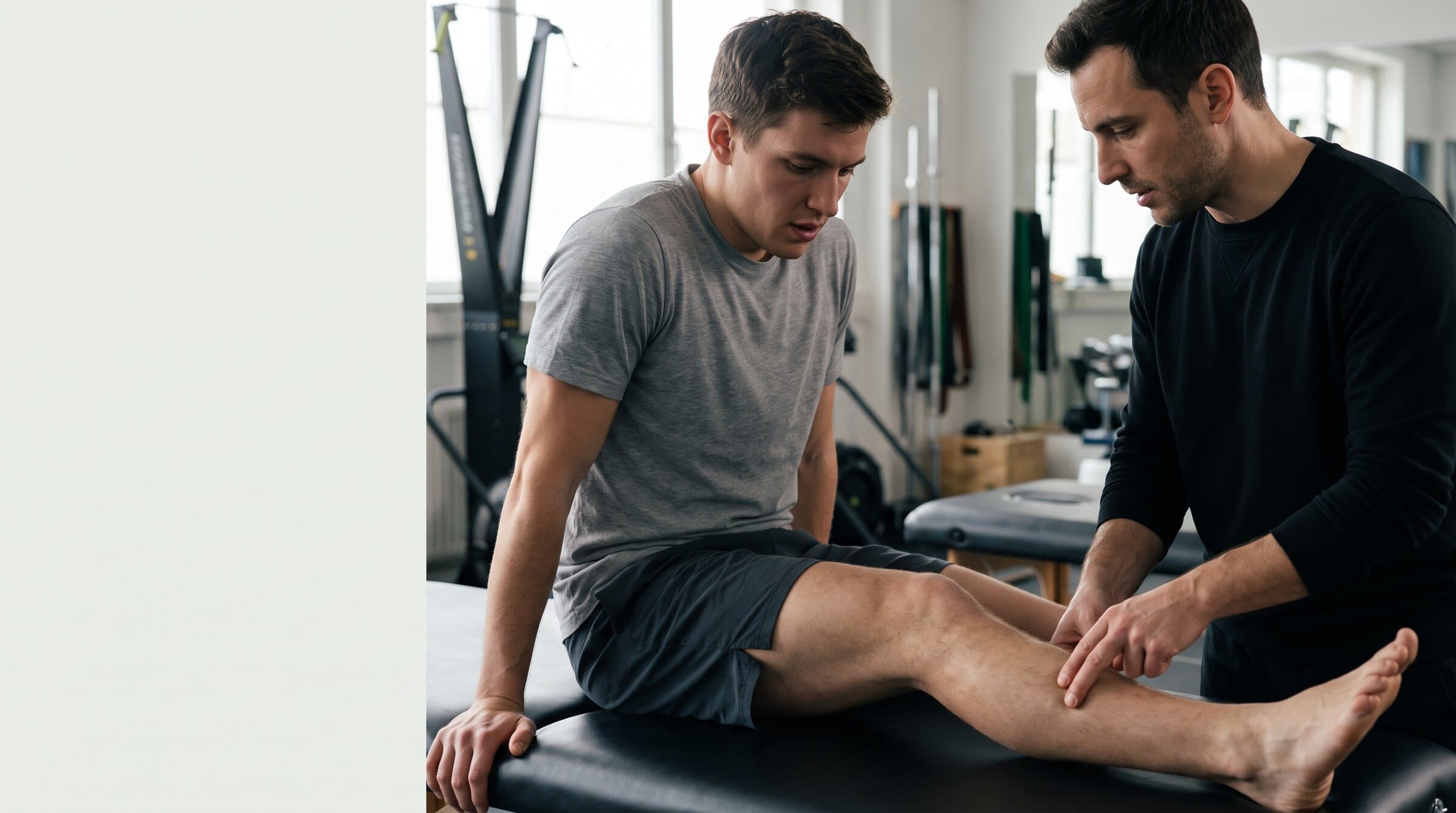
What Is Sports Recovery?
5 sections6 min read
The short answer
Sports recovery is the process of restoring readiness after physical effort. It starts with sleep, enough food and fluid, appropriate training load, and time. Easy movement and optional services such as massage, heat, cold, compression, or guided breathing may support comfort, but none replaces the fundamentals or medical care.
The decision this page helps you make
Recovery is not one treatment and it is not a reward reserved for elite athletes. It is the ongoing work of matching rest and support to the stress created by training, competition, travel, work, and daily life. Your useful starting point is simple: notice what you did, how you feel now, what you need to do next, and whether anything feels concerning. Then address the basics before adding a service. A hands-on or device-led option can be part of that plan when its experience, limits, and safety requirements fit your situation. It should never be presented as a cure, a guaranteed performance boost, or a substitute for qualified evaluation.

What matters before you choose
Plain-language definition
In plain language, sports recovery means helping your body and attention settle after effort so you can return to activity with an appropriate level of readiness. The process happens between sessions, not only inside a recovery studio. It includes rest, routine, and decisions about the next training demand. Feeling less tense can be useful, but comfort alone does not prove that an injury has healed or that you are cleared to train.
Core recovery inputs
Your strongest recovery inputs are usually ordinary ones: consistent sleep, sufficient food, fluid replacement that reflects sweat and heat, sensible spacing of hard sessions, and lower-intensity movement when it feels appropriate. These inputs work together. A missed meal, disrupted sleep, unusually hard workout, or stressful week can change how you respond. Improving the most obvious gap often matters more than stacking several paid modalities. Do not let a familiar label hide a symptom that is severe, unexplained, or moving in the wrong direction.
Optional service categories
Optional services fall into different experience categories. Massage is hands-on and adjustable through conversation. Sauna and cold exposure create temperature stress. Compression uses controlled pressure around a limb. Guided breathing centers on pacing and attention. Each choice has different screening questions, stop cues, and evidence limits. Compare what the service actually involves with your goal instead of assuming every recovery tool produces the same result.
Individual variation
Recovery needs vary because people, activities, schedules, health histories, and preferences vary. The service that feels useful after an endurance event may be a poor fit before strength training or during an illness. Start conservatively with unfamiliar experiences and share relevant context with the responsible provider. Your own response is useful information, but it is not proof that the same choice is safe or effective for everyone.
Medical boundary
Wellness recovery has a clear medical boundary. New, severe, worsening, or unexplained symptoms should not be self-labeled as ordinary soreness. Chest symptoms, breathing difficulty, fainting, major swelling, loss of function, or another possible emergency require prompt medical action. A recovery service cannot diagnose an injury, determine why symptoms are occurring, or replace care from an appropriately licensed professional. Consider whether the choice solves the actual constraint or merely adds another task to an already demanding recovery plan.


A practical way to use this information
- 1
For What Is Sports Recovery?, start with the plain-language definition and separate the topic from adjacent terms that are often used interchangeably.
- 2
Apply the idea to the activity that came before and the demand that comes next instead of copying a universal protocol.
- 3
Use the evidence section to distinguish supported findings, mixed findings, practical experience, and unanswered questions.
- 4
If a service is relevant, review its preparation, supervision, stop process, and current operating details before booking.
- 5
Use a qualified professional for diagnosis, medical clearance, persistent symptoms, medication questions, or a concern outside a wellness studio's scope.
Fit, limits, and when to choose another path
A recovery studio is not emergency or diagnostic care. New, severe, worsening, or unexplained symptoms should be assessed by an appropriate health professional before a wellness booking. A website cannot diagnose a condition, clear someone for a service, or replace emergency or clinical care. New, severe, worsening, or unexplained symptoms, fainting, breathing difficulty, chest symptoms, major swelling, loss of function, or other urgent concerns should be routed to appropriate medical care instead of a recovery booking. For What Is Sports Recovery?, follow the current service-specific screening and stop guidance rather than relying on general information alone.
Where this fits in the Recovery Mode system
Return to The Recovery Library for the complete topic map.
Continue with Breathwork Basics for Recovery, Cold Exposure Basics, or When to Schedule Sports Massage when that decision is closer to your situation.
For the service or selection path, review Choose Your Recovery.
For What Is Sports Recovery?, the right choice can change with the day. Compare the current experience, level of guidance, time, preparation, and what you intend to do next. Use the live booking or contact source for changing details, and do not treat general information as personal medical clearance.
Frequently asked questions
Sports recovery means the combination of rest, fuel, hydration, manageable training, and optional supportive practices used between physical efforts. Its practical aim is readiness for what comes next, not a promise that one service will repair every problem.
No. Anyone who exercises, works physically, travels, or returns to activity after a demanding day may think about recovery. The plan should match the person and the demand, not an athlete label. Use that cue with the week's training, sleep, nutrition, and life stress rather than interpreting it alone.
Start with sleep, adequate food, appropriate fluids, and a training schedule that includes easier periods. If one of those is clearly missing, address it before expecting a device or appointment to compensate. When several cues move away from normal together, reduce certainty and consider whether qualified guidance is needed.
Tools can provide a structured experience, such as hands-on pressure, heat, cold, compression, or guided breathing. Choose by comfort, safety, timing, and evidence, and treat any benefit as individual rather than guaranteed. Ordinary variation is expected, but a sustained decline in health or function deserves more than self-directed recovery.
Medical care is more appropriate for a recent injury, worsening or unexplained pain, neurologic symptoms, major swelling, loss of function, or any urgent concern. Call 911 for a medical emergency in New York City. A repeated pattern is more informative than one isolated observation, especially when normal function has not changed.
Next step
For What Is Sports Recovery?, confirm the current service details, responsible provider, screening, and personal-fit questions before reserving. Use Book Your Recovery Session for an operational question, and use an appropriate health professional for medical clearance or symptoms that need evaluation.
Reserve a session
Current durations, prices, providers, and availability live in the booking system, not on this page.
Booking is handled by Acuity Scheduling. Nothing on this page is medical advice or clearance to participate.
Sources and review basis
- Health Claims(opens in a new tab)
Official Regulator. Supports: FTC health-marketing guidance requires truthful, non-misleading, adequately substantiated express and implied health claims. Limits: Service-specific evidence and qualified review remain necessary.
- Legal Entity And Service Boundary(opens in a new tab)
First Party Legal. Supports: Current terms identify Portable Physical Therapy P.C. doing business as Recovery Mode and state that website content is not diagnosis or emergency care. Limits: Terms need counsel review against actual service entities and booking flow.
- About sleep(opens in a new tab)
Centers for Disease Control and Prevention. Supports: Sleep is important for health and well-being, with needs varying by age and person.
- Physical Activity Guidelines for Americans(opens in a new tab)
U.S. Department of Health and Human Services. Supports: Evidence-based physical activity guidance and the role of gradual, appropriate activity.
- Dehydration: symptoms and causes(opens in a new tab)
Mayo Clinic. Supports: Sweating, exercise, heat exposure, and dehydration risk.
- Massage Therapy: What You Need To Know(opens in a new tab)
National Center for Complementary and Integrative Health. Supports: Evidence limits, safety considerations, and questions to ask a massage practitioner.
- Cold water immersion risks(opens in a new tab)
American Heart Association. Supports: Cold shock, breathing, blood pressure, heart strain, and gradual acclimation cautions.