
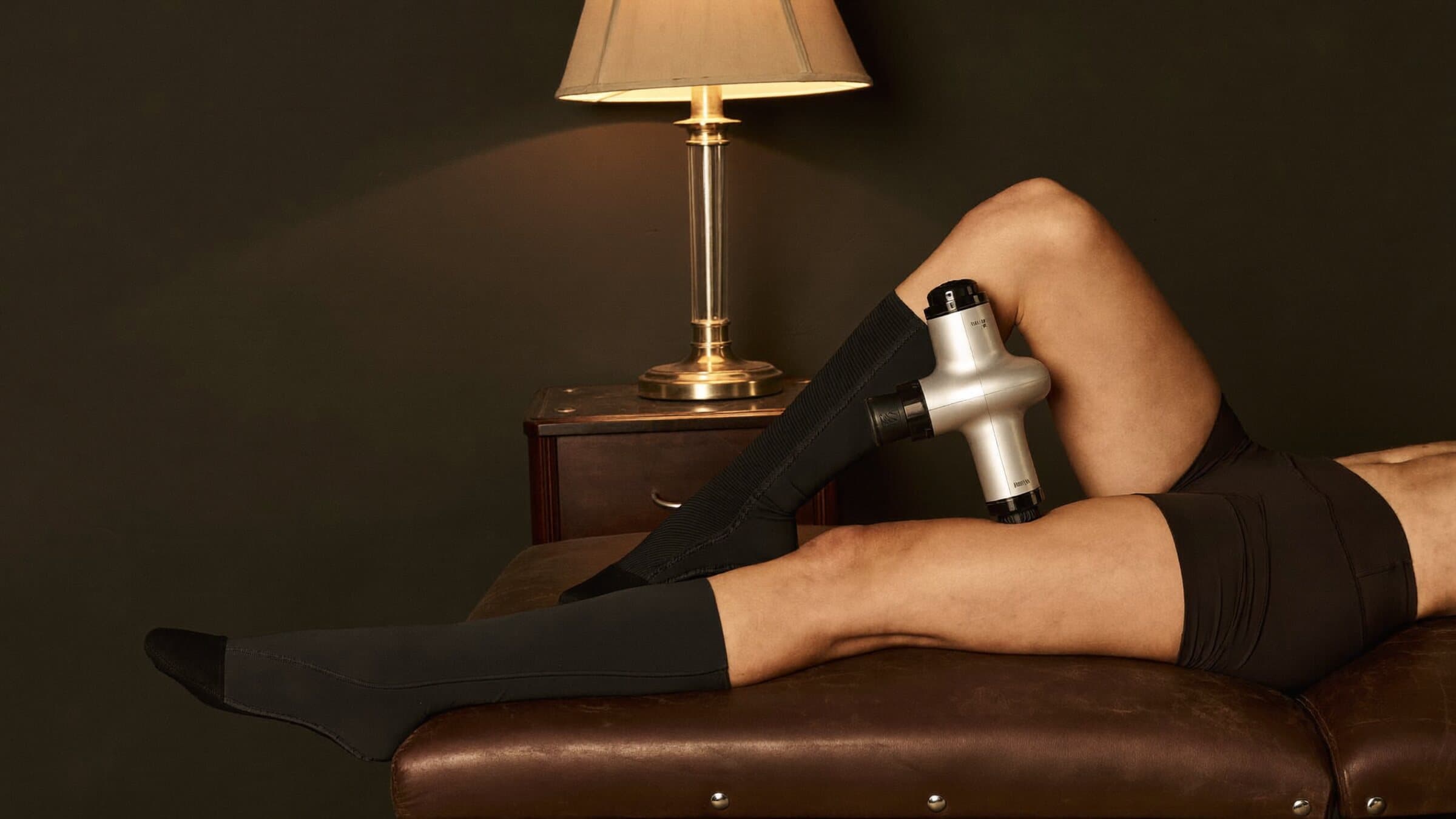
Compression Boots Versus a Massage Gun
5 sections7 min read
The short answer
Compression boots cycle programmed pressure across broad portions of the legs, while a massage gun applies handheld percussion to a small area under the user's control. Boots require less attention during the session. A massage gun offers precise spot selection but increases self-use responsibility. Stop for pain, numbness, swelling, skin change, or loss of control.
The choice this page clarifies
These tools differ mainly in coverage and control. Compression boots enclose much of the legs and deliver automated pressure through a program. A massage gun is moved by hand across selected soft-tissue areas. One supports a longer passive experience; the other supports short, active spot use. Neither is appropriate over every body structure or symptom, and neither should be used to numb or push through possible injury. The practical choice depends on the experience you want, who provides it, how much control you retain, where it fits in your schedule, and what screening is needed. Neither side wins for every person. Confirm the current menu, equipment, provider credentials, price, and booking terms directly before relying on an option described here.
Compare the options by the factors that matter
Full-leg versus spot coverage
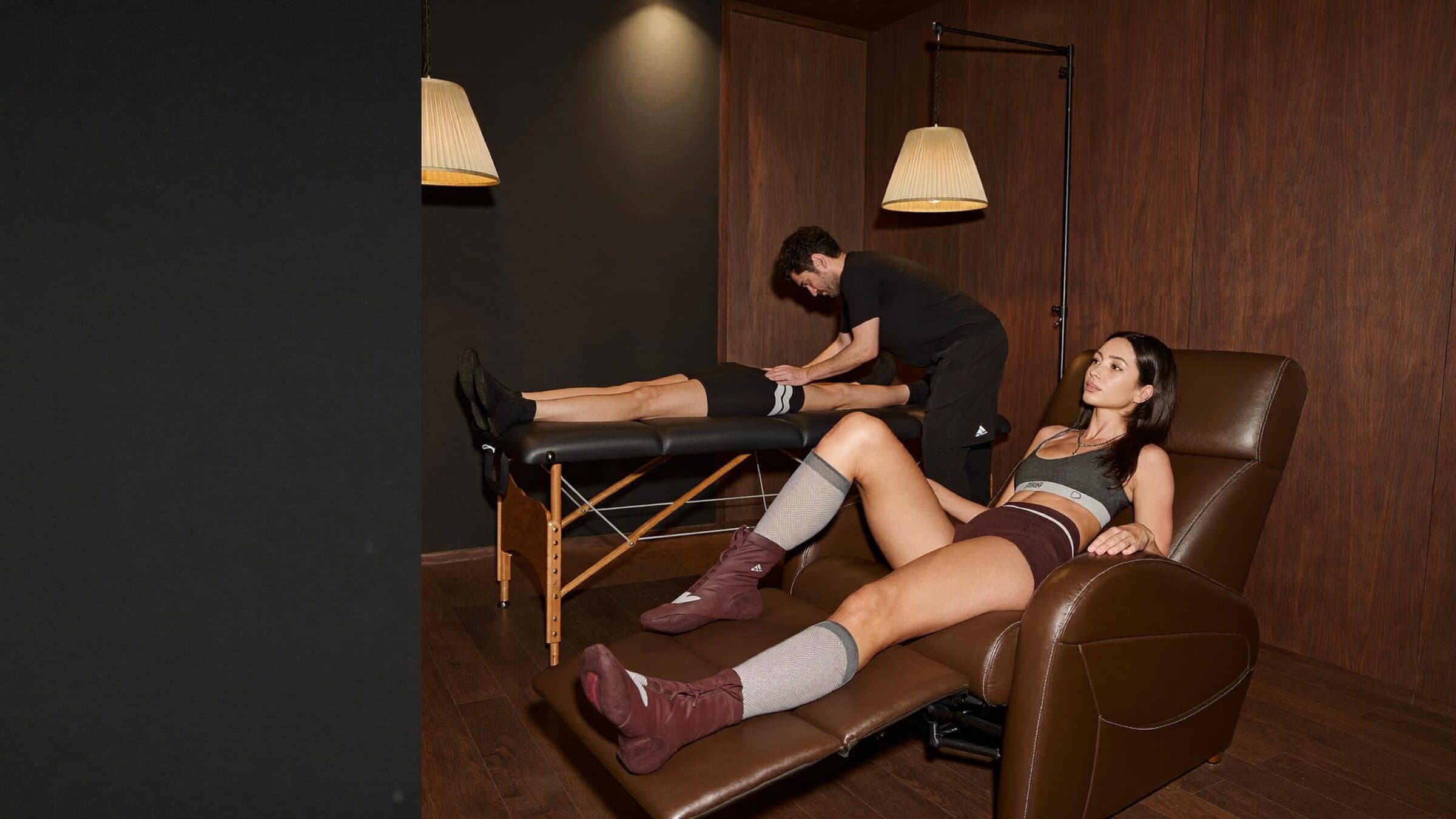
Compression sleeves can cover feet, calves, and thighs depending on the verified device and fit. A massage gun contacts only the spot under its head at a given moment. Boots therefore provide broader leg coverage, while the gun can reach a selected area but requires the user to reposition it continuously. Compare the actual session experience and scope, not the strongest marketing phrase. The better fit is the one that matches your desired level of contact, coverage, and participation.
Automated versus handheld control
Boots automate pressure sequence and timing after settings are chosen, though you must retain access to stop controls and report symptoms. A massage gun requires constant hand placement, angle, movement, and pressure decisions. That active control can be useful, but it also makes poor technique and overuse easier. Ask who or what controls the intensity and how quickly it can be changed. That distinction often matters more than which option sounds more advanced.
Time and attention
Compression can suit a longer seated or reclined session because the program runs without constant hand movement. A massage gun demands attention and may be better suited to brief selected-area use. Total time should follow device instructions and personal tolerance rather than an attempt to cover every sore area. Place the choice on your real calendar. Allow for setup, the session itself, and how you personally respond before a demanding workout, event, drive, or work obligation.
Pressure differences
Boot pressure is distributed through inflatable zones and changed with device settings. A massage gun creates rapid percussion at a small contact point, with intensity affected by speed, attachment, angle, and how hard you press. Numbers from one device category do not translate directly to the other. Screening is part of the comparison, not an afterthought. Share relevant conditions, medications, recent procedures, injuries, and unusual symptoms with the appropriate provider.
Self-use safety
Do not use a massage gun over the front or side of the neck, head, spine, bones, joints, open wounds, major bruising, numb areas, or unexplained swelling. Stop for sharp pain, tingling, loss of sensation, skin change, dizziness, or worsening symptoms. Compression has separate circulation, clotting, cardiac, and fit screening. Availability and commercial terms can change. Verify the exact service name, inclusions, provider, equipment, price, and cancellation terms in the current booking flow before purchasing.

Make the comparison in five steps
- 1
For Compression Boots Versus a Massage Gun, name the two choices precisely. Compare experiences and booking formats, not broad labels that can mean different things.
- 2
Start with the reader's context: recent activity, desired experience, available time, tolerance for touch or temperature, and what comes next.
- 3
Check the fit and screening information for each option. A comparison page does not determine personal suitability.
- 4
Confirm live duration, provider, room setup, price, and availability in the approved booking source.
- 5
Choose the option with the clearest fit, or use Find Your Mode when the tradeoff is still unclear.
Fit, limits, and when neither option is right
Massage should not be used to delay medical evaluation. NCCIH advises people to discuss suitability with a health professional when they have relevant health conditions and to ask about the practitioner's training and credentials. A website cannot diagnose a condition, clear someone for a service, or replace emergency or clinical care. New, severe, worsening, or unexplained symptoms, fainting, breathing difficulty, chest symptoms, major swelling, loss of function, or other urgent concerns should be routed to appropriate medical care instead of a recovery booking. For Compression Boots Versus a Massage Gun, follow the current service-specific screening and stop guidance rather than relying on general information alone.
Continue through the decision system
Return to Choose Your Recovery for the complete topic map.
Continue with Cold Plunge Versus Localized Cryotherapy, Localized Versus Whole-Body Cryotherapy, or Compression Boots Versus Sports Massage when that decision is closer to your situation.
For the service or selection path, review Sports Massage in Astoria, Queens.
For Compression Boots Versus a Massage Gun, the right choice can change with the day. Compare the current experience, level of guidance, time, preparation, and what you intend to do next. Use the live booking or contact source for changing details, and do not treat general information as personal medical clearance.
Other choices this library settles
- Hands-onSports Massage Versus Deep Tissue Massage
- Hands-onSports Massage Versus Assisted Stretching
- Hands-onSports Massage Versus Sports Acupuncture
- Hands-onCupping Versus Myofascial Release
- HeatInfrared Sauna Versus Traditional Sauna
- ContrastSauna Versus Cold Plunge
- ContrastContrast Therapy Versus One Modality
- ColdCold Plunge Versus Localized Cryotherapy
- ColdLocalized Versus Whole-Body Cryotherapy
- PressureCompression Boots Versus Sports Massage




Frequently asked questions
Compression boots cover much more of the legs at once through sleeves around the feet, calves, and thighs, depending on the device. A massage gun affects only the small spot under its attachment and must be moved manually. Use that distinction to match the experience rather than to predict a health outcome.
Boots automate the pressure sequence after settings are selected, so active control is limited to setup, adjustment, and stopping. A massage gun requires continuous decisions about location, speed, attachment, angle, and applied pressure. Ask how controls, provider involvement, and your ability to stop differ in practice.
Compression is easier for a longer passive session because the device cycles while you sit or recline. A massage gun requires attention and hand effort, making it more suitable for brief, selected-area use within manufacturer guidance. Confirm the exact protocol and leave enough time to observe your own response.
Boots distribute pressure through inflatable zones. A massage gun delivers rapid percussion at one small contact point. Settings are not directly comparable, and stronger pressure or speed does not establish a better outcome. Complete option-specific screening and share relevant conditions, medications, and recent procedures.
Stop self-use for sharp pain, numbness, tingling, skin change, swelling, dizziness, or worsening symptoms. Avoid vulnerable structures and follow manufacturer instructions. Unexplained one-sided swelling, possible clot symptoms, or major injury needs medical evaluation. Verify every current commercial and operational detail directly before purchasing or arriving.
Next step
For Compression Boots Versus a Massage Gun, confirm the current service details, responsible provider, screening, and personal-fit questions before reserving. Use Book Your Recovery Session for an operational question, and use an appropriate health professional for medical clearance or symptoms that need evaluation.
Reserve a session
Current durations, prices, providers, and availability live in the booking system, not on this page.
Booking is handled by Acuity Scheduling. Nothing on this page is medical advice or clearance to participate.
Sources and review basis
- Leg Compression(opens in a new tab)
First Party Web. Supports: The official site markets NormaTec leg compression as a bookable service. Limits: Exact device model, labeling, session length, and screening are unverified.
- Compression Device Claims(opens in a new tab)
Official Regulator. Supports: FDA clearance language for named NormaTec models supports narrow device wording and does not itself support broad recovery or performance promises. Limits: Actual device model and IFU are unverified.
- Health Claims(opens in a new tab)
Official Regulator. Supports: FTC health-marketing guidance requires truthful, non-misleading, adequately substantiated express and implied health claims. Limits: Service-specific evidence and qualified review remain necessary.
- Recovery Mode sports massage page(opens in a new tab)
Recovery Mode. Supports: Sports massage formats, techniques represented, durations, and prices shown on the current page.
- Massage Therapy: What You Need To Know(opens in a new tab)
National Center for Complementary and Integrative Health. Supports: Evidence limits, safety considerations, and questions to ask a massage practitioner.
- New York massage therapy license requirements(opens in a new tab)
New York State Education Department. Supports: Massage therapy is a licensed profession in New York and the published licensure requirements.
- Recovery Mode NormaTec compression page(opens in a new tab)
Recovery Mode. Supports: NormaTec leg compression is represented as a current service.
- Intermittent pneumatic compression and exercise recovery review(opens in a new tab)
PubMed. Supports: The evidence base is mixed and certainty varies for pneumatic compression and recovery outcomes.