
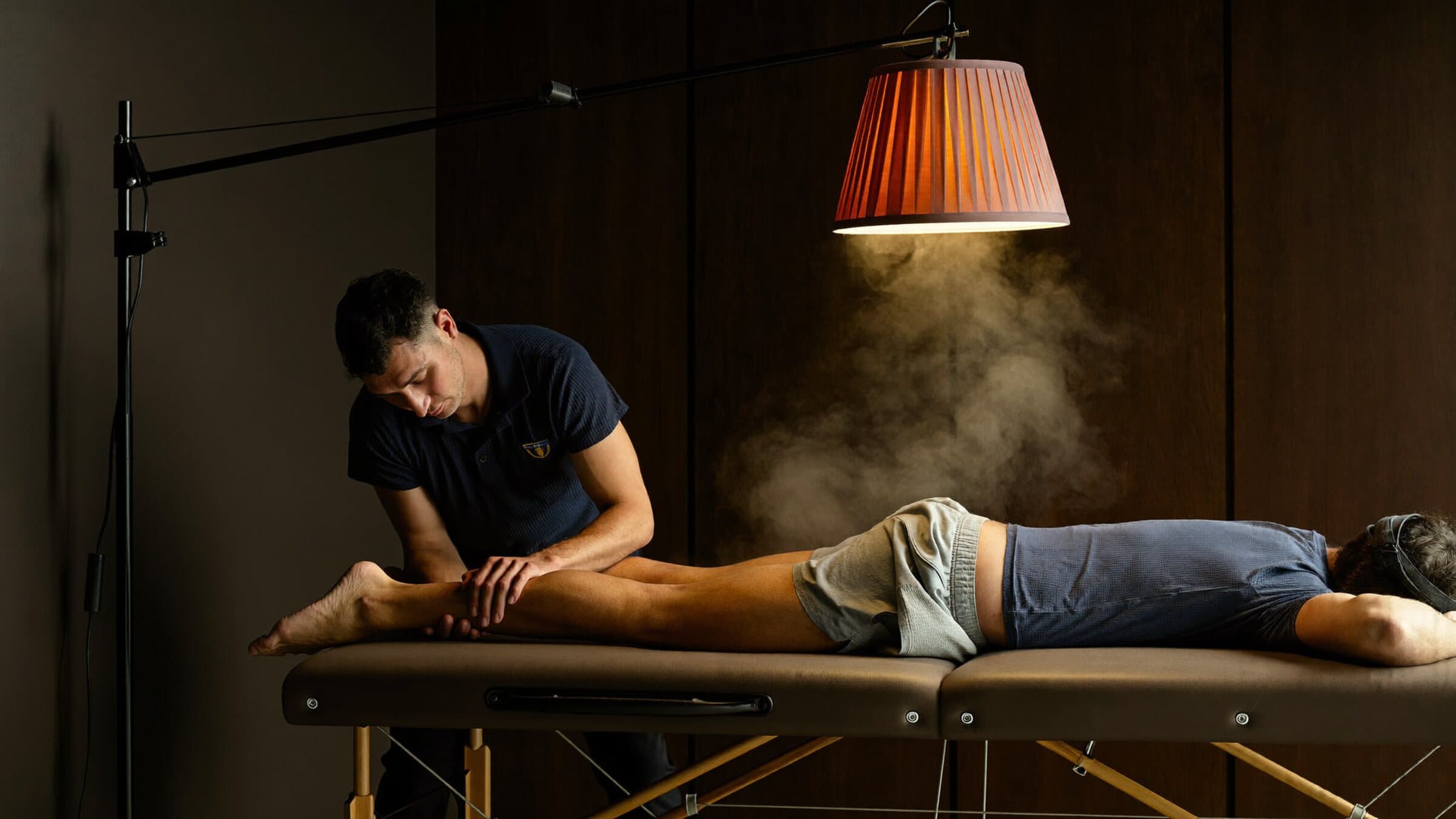
Sports Massage Before a Race
5 sections7 min read
The short answer
Pre-race sports massage should favor predictability. Timing depends on event length, travel, taper, pressure, technique, and your prior response. Avoid unfamiliar deep work or first-time cupping close to competition because tenderness or marks can occur. Tell the licensed therapist your race time, recent training, symptoms, and desired post-session readiness.
The decision this page helps you make
Race week is not the time to discover how your body responds to a new hands-on technique. A familiar, comfortable session may fit some athletes, while strong or highly focused pressure can create temporary tenderness that interferes with warm-up or competition. There is no universal appointment cutoff because events, people, and massage approaches differ. Work backward from the start time, travel, sleep, meals, shakeout activity, and the consequences of feeling sore. Share the taper and any recent injury concerns rather than asking for the deepest available option. Massage cannot guarantee a personal best or prevent injury, and a sudden or worsening symptom needs evaluation before it is treated as ordinary race tension.

What matters before you choose
Race-week timing
Start with the race calendar and work backward. The closer massage sits to competition, the less room you have to observe and recover from an unexpected response. Event distance, start time, travel, sleep, packet pickup, warm-up, and prior appointments all affect placement. A timing choice that felt fine before an easy local race may not fit a championship event or unfamiliar travel schedule. Consent applies to each area and technique, so you can modify positioning, pressure, draping, or the session itself.
Familiar versus new techniques
Keep techniques familiar when performance matters. Race week is a poor time to try cupping, aggressive deep tissue, or a new practitioner for the first time because marks, tenderness, or a different movement sensation can occur. If a technique has worked comfortably before, that history is useful but not a guarantee. Consent and pressure still need active adjustment during the session. Describe the sensation as it occurs, since words such as deep or firm can mean different things to different people.
Pressure and temporary soreness
Pressure should support the agreed experience without becoming a toughness test. Strong work can cause guarding or temporary soreness, and neither proves the session will improve performance. Explain whether you want a light pre-event transition, attention to a familiar area, or simply relaxation. Ask for immediate adjustment if pressure feels sharp, burning, electric, numb, or more intense than you want. Choose pressure and timing according to the actual activity plan rather than copying another athlete's preferred massage routine.
Training taper context
A taper changes training volume but can also change how the body feels, how much attention you give small sensations, and how much recovery time is available. Do not use massage to chase every unfamiliar feeling. Review whether the symptom began suddenly, affects function, or is worsening. New injury signs should be evaluated rather than repeatedly pressed in the hope that they disappear. Recent trauma, significant swelling, altered sensation, skin injury, or worsening pain changes whether massage is an appropriate next step.
Communication with therapist
Tell the therapist the event, distance, start time, travel plan, last hard session, next shakeout, areas to avoid, prior massage response, relevant health history, skin concerns, and any recent injury. Confirm New York licensure and current service details. A clear shared plan lets pressure and technique match the race context without promising injury prevention or performance improvement. A technique should earn its place through the agreed goal and active consent, not because it appears on a service list.


A practical way to use this information
- 1
For Sports Massage Before a Race, start with the plain-language definition and separate the topic from adjacent terms that are often used interchangeably.
- 2
Apply the idea to the activity that came before and the demand that comes next instead of copying a universal protocol.
- 3
Use the evidence section to distinguish supported findings, mixed findings, practical experience, and unanswered questions.
- 4
If a service is relevant, review its preparation, supervision, stop process, and current operating details before booking.
- 5
Use a qualified professional for diagnosis, medical clearance, persistent symptoms, medication questions, or a concern outside a wellness studio's scope.
Fit, limits, and when to choose another path
Massage should not be used to delay medical evaluation. NCCIH advises people to discuss suitability with a health professional when they have relevant health conditions and to ask about the practitioner's training and credentials. A website cannot diagnose a condition, clear someone for a service, or replace emergency or clinical care. New, severe, worsening, or unexplained symptoms, fainting, breathing difficulty, chest symptoms, major swelling, loss of function, or other urgent concerns should be routed to appropriate medical care instead of a recovery booking. For Sports Massage Before a Race, follow the current service-specific screening and stop guidance rather than relying on general information alone.
Where this fits in the Recovery Mode system
Return to When to Schedule Sports Massage for the complete topic map.
Continue with Sports Massage After a Race, What to Expect at Your First Sports Massage, or Cupping Marks and Aftercare when that decision is closer to your situation.
For the service or selection path, review Sports Massage in Astoria, Queens.
For Sports Massage Before a Race, the right choice can change with the day. Compare the current experience, level of guidance, time, preparation, and what you intend to do next. Use the live booking or contact source for changing details, and do not treat general information as personal medical clearance.
Frequently asked questions
There is no universal cutoff. Timing depends on pressure, technique, familiarity, event importance, travel, and your response. Leave more observation time for deeper or unfamiliar work and protect predictability close to the start. Skin, medication, circulation, pregnancy, surgery, and injury context can all change how hands-on pressure should be approached.
Strong pressure right before competition may leave temporary tenderness or change how movement feels. Pain is not required. If you book close to the race, discuss a familiar, conservative approach with the licensed therapist. Pressure should remain adjustable throughout the session, with sharp, burning, electric, or numb sensations prompting an immediate change.
Usually not. First-time cupping can leave visible marks or skin sensitivity, creating an avoidable uncertainty. Test any technique well before an important event and consent only after understanding its possible effects. Do not use pain tolerance, bruising, or visible marks as a measure of how effective the work was.
Reduced training can create more calendar space, but it does not make every technique risk-free. Consider how you feel, the next shakeout, travel, sleep, and whether any symptom needs evaluation instead of massage. Persistent or escalating symptoms after a session deserve appropriate evaluation rather than being dismissed as necessary soreness.
Share race distance and time, travel, recent training, taper, current symptoms, injury history, skin or medication concerns, pressure preference, past massage response, and what you need to do immediately after the appointment. Confirm that the responsible therapist holds the required New York license and that the technique fits the agreed scope.
Next step
For Sports Massage Before a Race, confirm the current service details, responsible provider, screening, and personal-fit questions before reserving. Use Book Your Recovery Session for an operational question, and use an appropriate health professional for medical clearance or symptoms that need evaluation.
Reserve a session
Current durations, prices, providers, and availability live in the booking system, not on this page.
Booking is handled by Acuity Scheduling. Nothing on this page is medical advice or clearance to participate.
Sources and review basis
- Sports Massage(opens in a new tab)
First Party Web. Supports: The official sports massage page describes sports massage as a bookable service and mentions cupping, deep tissue, and myofascial release. Limits: Provider assignment, current price, and licensing require verification.
- Massage Evidence And Safety(opens in a new tab)
Official Health Source. Supports: Massage evidence and safety language should remain qualified and avoid guaranteed outcomes. Limits: Does not substantiate a Recovery Mode outcome claim.
- Health Claims(opens in a new tab)
Official Regulator. Supports: FTC health-marketing guidance requires truthful, non-misleading, adequately substantiated express and implied health claims. Limits: Service-specific evidence and qualified review remain necessary.
- Recovery Mode sports massage page(opens in a new tab)
Recovery Mode. Supports: Sports massage formats, techniques represented, durations, and prices shown on the current page.
- Massage Therapy: What You Need To Know(opens in a new tab)
National Center for Complementary and Integrative Health. Supports: Evidence limits, safety considerations, and questions to ask a massage practitioner.
- New York massage therapy license requirements(opens in a new tab)
New York State Education Department. Supports: Massage therapy is a licensed profession in New York and the published licensure requirements.
- Heat and Cold Therapy for Delayed Onset Muscle Soreness(opens in a new tab)
PubMed. Supports: A review found short-term soreness effects for some heat and cold approaches, with a need for more high-quality comparative evidence.
- Massage and Delayed Onset Muscle Soreness(opens in a new tab)
PubMed. Supports: A systematic review reported lower post-exercise soreness ratings in massage groups while not establishing a universal individual outcome.